Spell-by-spell: Conjure Animals

(All links take you to DnD Beyond unless otherwise noted.)

Overview

“You conjure nature spirits that appear as a Large pack of spectral, intangible animals in an unoccupied space you can see within range. The pack lasts for the duration, and you choose the spirits’ animal form, such as wolves, serpents, or birds.

“You have Advantage on Strength saving throws while you’re within 5 feet of the pack, and when you move on your turn, you can also move the pack up to 30 feet to an unoccupied space you can see.

“Whenever the pack moves within 10 feet of a creature you can see and whenever a creature you can see enters a space within 10 feet of the pack or ends its turn there, you can force that creature to make a Dexterity saving throw. On a failed save, the creature takes 3d10 Slashing damage. A creature makes this save only once per turn.

Using a Higher-Level Spell Slot. The damage increases by 1d10 for each spell slot level above 3.” (Dnd Beyond Link)

First things first, the spell doesn’t actually conjure animals. It conjures nature spirits. Actually no, it doesn’t even do that. It basically summons a 30’ wide rolling ball of immaterial but deadly whirling blades. 

At a glance, the spell has no benefit outside of combat, but it has a duration of ten minutes, so I guess you could park it in a doorway while you searched a room. 

Damage-wise, the spell can be brutal because it can let you damage enemies twice with the same attack and doesn’t dip into your action economy to move around. Against mooks and minions it can quickly clear a fight, and even against boss-level foes, it does enough round-to-round damage to wear them down or keep them at bay. 

Conjure animals in past editions

In AD&D, good ol’ beautifully-named Animal Summoning I let you summon up to eight normal or giant animals, but you had to guess what type was available in your area (you did get three guesses, though). The animals would aid the caster in whatever way they could, sticking around for a fight or until the caster was safe, the mission accomplished, they were dead or dismissed.

In 2nd edition, conjure animals was a 6th-level priest or wizard spell that summoned up to twice your level in hit dice worth of mammals (and only mammals. Dolphins, fine, but no emus.) If you wanted to specify the animal mammal summoned, you only got half as much HD. The animals fur-babies stuck around for twice your level in rounds, so they were clearly in it to win it. The conjured animals only wanted to fight, and if you asked them to do anything else, they might turn against you. They disappeared when slain like enemies in a side-scroller from the 90s. 

3rd edition summoned 1-8 fey spirits that took the shape of animals. This had some weird corner-case interactions with the rules (protection from evil and good would protect you from the summoned spirits for example), but otherwise didn’t really matter. Because they stuck around for an hour, you could the spirits for all sorts of things: scouting, guarding, hunting, fighting, travel, or spying.

In 4th edition, Summon Beasts is the closest I could find. You called forth a number of animals suitable to the area equal to your Charisma modifier. They were your minions until they were hit, at which point they would run away. This is just pure awesome-sauce—actual animals, acting like animals. 

5.0 went back to spirits, but at least it still conjured something animal-ish. 

How good is conjure animals?

There are lots of good 3rd-level spells (maybe the sweet spot for spells in the game). But conjure animals is clearly one of the better damage spells at that level for rangers and druids, if not the best. From a game design point of view, it feels overpowered, overly combat-focused, and the gains on action economy are lost by the sheer volume of saving throws. And it doesn’t do what it says it does. Definitely a C-tier effort by the design team. 

House rules and other thoughts

I think DnD Beyond commenter Pyrobolser hit the nail on the head with this comment from September 4th of last year.

“That’s just a flaming sphere with fangs and claws.

“I know that some DM complained about invocation spells being a hassle to run in combat, but at least they were thematically correct.
“Sure, it will slow down the battle, but seeing the druid in my group having fun choosing what animals she’s going to bring to the battle was well worth the time.

“I feel there was a lot of solution to remake this spell without completely removing it’s original purpose and aesthetics. Reduce the number of summons to a max of 4, give a list of summons to pick from in the spell description, or even give a generic stat bloc for a “summoned beast”.

“Just anything but this generic “dex save or damage” spell.”

How do we fix this and not over-complicate DnD’s already brutal action economy?

  • Get back to animals.
  • Get back to animals appropriate to their environment (or brought along with the caster).
  • Give the spell utility outside of combat.
  • Require changing the animals’ target or action require a bonus action.
  • Leverage the rules for mobs from the DMG.

Conjure Animals (Far Reach revision)

3rd-level conjuration (Druids, Rangers)
Casting Time: 1 action
Range: 120’
Components: V, S 
Duration: Concentration (up to one hour)
Attack/Save: Special (see below)

You point at an area within range and make a bestial cry. A number of natural beasts, giant beasts, or swarms native to the terrain emerge from the area and move their speed toward you. If there are animals visible in the area, such as a herd of elk, or a flock of birds, the animals will come from these groups first, even bursting their fetters or disregarding their riders to join you (if feasible). The number of animals that heed the summons is equal to your proficiency bonus in HD and don’t have to be the same species. The summoned animals get their own intiative roll and will follow your spoken commands to the best of their ability (they are still animals after all), but they will flee if hit or damaged, pausing only to attack any creatures that attempt to hinder them. Giving the animals a new command or having them attack a different target takes a bonus action. If a creature that you summoned is killed, you take psychic damage equal to its hit dice. When the spell ends, the animals slink back from whence they came. 

GM Tip. Use the Mobs rules in the DMG to handle large groups of summoned beasts.

Casting against mounts. You can cast this against beasts that are being used as mounts. In this case, the mounts get a Wisdom saving throw against your spell DC. If they fail, they have the Charmed condition for the duration of the spell and attempt to come to you and obey your commands. As an action, a rider can attempt a Wisdom (Animal Handling) check against your spell save DC to free the mount from your influence.

At higher-levels. For each spell-slot above three, the spell summons an additonal level-equivalent HD of monsters equal. A 9th-level caster using a 5th-level spell slot to cast the spell could summon 12 HD worth of beasts. A 20th-level cast using a 9th-level spell slot could summmon 

Addendum: Monster Manual beasts by terrain and HD

Note: I left off the dinosaurs (a little too J-Park for my usual fantasy tastes), and Blood Hawks (clearly a monstrosity). If you feel strongly otherwise, by all means include them at your table.

Arctic

Coastal

Desert

Forest

Grassland

Hill

Mountain

Swamp

Underdark

Underwater

Urban

About Spell-by-Spell

Spell-by-spell is a series of articles where we discuss the spells in Dungeons & Dragons 5.5e. We start with the spell as-written, and we’ll provide our take on how “good” the spell is (S-Tier to F-Tier), and thoughts for using the spell as a player or DM. We offer up suggestions for adding color or flavor to the spell, out-of-the-box ideas for non-combat applications, and occasionally stories from the game-table. We might look the history of a spell and the different versions across editions or even different games.  Finally, we weigh in on how well the spell does what it says it does; how well it plays in-game (does it slow the game down, does it steal the thunder of other classes, is it fun); whether it should be banned, nerfed, or boosted; and revisions we’d like to see in theoretical future editions or that we plan to make (or have made) in our own D&D games.

Spell-by-Spell Tier Rankings:

F-Tier: Spells that are so bad, they shouldn’t be in the game. This includes useless and trap spells, as well as always-spam spells that seem to have been created to cause friction between players and GMs.

S-Tier: Spells that are so cool or so useful that you want to be able to cast them as many times as possible.

A-Tier: Spells that you always want to have in your spellbook or spell list. There may be situations where you would choose to not memorize or prepare them, but those cases are rare.

B-Tier: Good, solid spells. Spells you are often happy you have in your spellbook or spell list, but maybe don’t memorize or prepare every day.

C-Tier: Spells that are only situationally useful, that do too little damage, or that have some other strange or confusing unexpected flaw. Also poorly-named spells that don’t do what you would think they do.

D-Tier: Spells that are poorly designed, overshadow the schtick of other classes, or interact with other effects or abilities in ways detrimental to the player or game.

SotDQ Remix: The Goals

Here were my goals when I started the campaign:

  1. Eliminate the railroads. Give the players free reign to make their own meaningful choices and take the story wherever they want to take it.
  2. Make the war feel real.  Based on the initial reviews of the board-game, (And knowing I’d be running the game online), we decided to skip that tie-in, but I wanted to fulfill the adventure’s premise and promise of being the D&D “War Story,” and give the characters the ability to make tactical and strategic decisions. I also wanted to drive home the horrors and costs of war (especially against an enemy with air superiority).
  3. Hit the Dragonlance Highlights. For me, that includes the Towers of High Sorcery and the Test, Solamnic Knights, Kender, Tinker Gnomes, the three moons, the Cataclysm, steel pieces, and of course, dragons.

We finished SotDQ in about a year. The group wanted to continue playing their characters,  experience high-level play, and if possible, finish (and win!) the war. I took a few months off to figure out what came next, gather my resources, build out the enemy calendar and ticking clocks and the course of the war should the characters not intervene, then we got back together and set the characters loose upon the world. 

In the second half of the campaign, my goals were:

  1. Sandbox play. Open up Krynn even more, and let the characters drive the story.
  2. Put the characters in command. If they desired it, I wanted to have the option of letting the characters control some or all of the allied forces, adding a war-game component to the game.
  3. Hit more highlights. I expanded the list of Dragonlance-specific highlights to include Dargaard Keep, the Nightmare of Silvanesti, the Blood Sea of Istar, Icereach, the High Clerist’s Tower, Palanthas, the Whitestone Council, Dragonorbs, Thorbardin, the Hammer of Ergoth, the Silver Arm of Ergoth, and finally, Takhisis herself.

It was a lot of work. Hopefully some of that work will help others who want to run SotDQ or continue their campaign beyond that adventure.

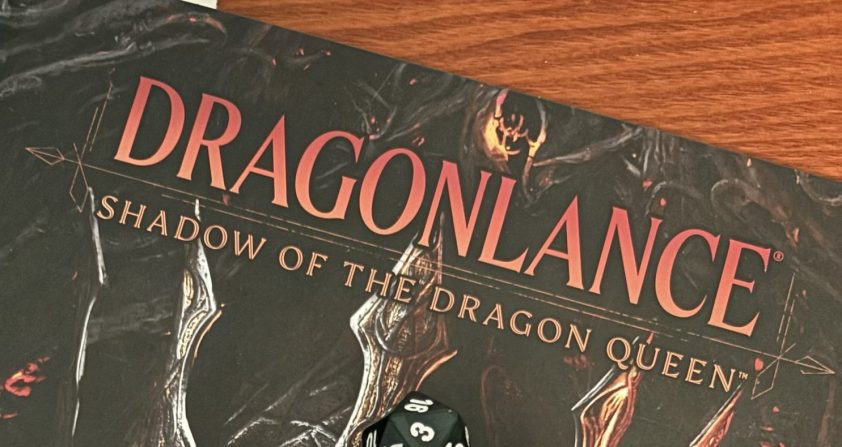
About the Far Reach Remix of Dragonlance: Shadow of the Dragon Queen

Two-and-a-half years ago, my friends from my early-20s (age, not decade) gaming group (a thing that existed over 20 years ago) agreed to get back together and start playing D&D again on Sundays. And the campaign we would be starting? Dragonlance: Shadow of the Dragon Queen. 

Why would we start down a notorious railroad saved only by being a slightly less notorious railroad than the orignal DL adventures? Well, blame our middle-school selves who grew up reading the original Dragonlance Chronicles in a time just before grunge. Big hair was in, Poison rocked the airwaves, and angsty half-elves were cutting-edge fantasy. This was a time before YA novels, 3rd edition, or the internet, so yes, the idea of getting to play through the War of the Lance was too tempting to ignore.

I did what I could to remove the railroads, to give the characters meaningful choices, and to shift the plot into something that seemingly evolved naturally. Looking back, I would have done a few things differently. 

In that vein, we’re starting a series of posts on the Far Reach, which (all credit to Jason Alexander of The Alexandrian for blazing the trail), we’re calling the Far Reach Remix of Shadow of the Dragon Queen (FRR:SotDQ?). The hope is that some of this work may help other DMs who can’t escape the allure of Krynn. As always, your thoughts and feedback are welcome and valued.

Spell-by-spell: Wall of Fire

(All links take you to DnD Beyond unless otherwise noted.)

Overview

“You create a wall of fire on a solid surface within range. You can make the wall up to 60 feet long, 20 feet high, and 1 foot thick, or a ringed wall up to 20 feet in diameter, 20 feet high, and 1 foot thick. The wall is opaque and lasts for the duration.

“When the wall appears, each creature in its area makes a Dexterity saving throw, taking 5d8 Fire damage on a failed save or half as much damage on a successful one.

“One side of the wall, selected by you when you cast this spell, deals 5d8 Fire damage to each creature that ends its turn within 10 feet of that side or inside the wall. A creature takes the same damage when it enters the wall for the first time on a turn or ends its turn there. The other side of the wall deals no damage.

Using a Higher-Level Spell Slot. The damage increases by 1d8 for each spell slot level above 4.”(Dnd Beyond Link)

Our sorceror loves wall of fire. It’s so flexible. It can be used for offense or defense. It blocks line-of-sight. And while they’re figuring out exactly how to place it for maximum effect, the rest of us have twenty minutes to stretch, grab a beverage, or catch up on sleep.

5d8 damage to everything in a 60’ line is fine damage for a 4th-level spell—maybe too much damage if we ever want to see anything leap through the flames. The whole “only one side of the wall does damage” thing is just fiddly and overly-complicated. And like way too many spells, the list of casters is long: druids, sorcerers, wizards, light clerics and forge clerics, and warlocks of both heavenly and diabolical patrons.  

Wall of fire in past editions

In OD&D, the wall did 1d6 damage to any passing through (2d6 damage to undead), and creatures under 4HD couldn’t cross it at all. In AD&D, wall of fire was a druid spell. It could be a wall or a ring, and it did 4d4 damage (+1 point/level) to any creature touching it. AD&D started the damage from the heat radiating off the wall. Idisosyncratically, the spell decription specified that the flames were amber in color. In second edition, the flames became violet or reddish-blue (aka purple?) if you were a wizard, but yellow-green or amber for priests. The heat only radiated from one side, and depending on your level, the wall could be huge (20 20’ squares at 20th level). 

In 3rd edition, they settled back on violet for all walls. The wall could be made permanent with our old friend permanency. In 4th edition, the wall only granted partial concealment. 

How good is wall of fire?

The spell is fine, but every time it gets cast, I sigh. It takes the caster forever to place it exactly just so, and we always forget which side of the fire is the hot side and who needs to flee the heat. As written, it’s a C-tier spell.

House rules and other thoughts

Reddish-blue Purple fire is cool. Walls of fire are cool. We want people jumping through them because it’s dramatic. I’m not sure why they can’t be floating in air, and you should have a means as a player to create a permanent one. Concentration spells don’t need additional time limits.

Wall of Fire (Far Reach revision)

4th-level evocation (Sorcerer, Warlock, Wizard)
Casting Time: 1 action
Range: 30’
Components: V,S,M (a small piece of phosphorous)
Duration: Concentration
Attack/Save: Dex Save
Damage/Effect: Fire

An immobile, blazing curtain of shimmering purple fire springs into existence 30’ before you. The wall is 60’ long and 20’ high. Any creature caught in the wall when it appears or ending its turn in contact with the wall takes 4d8 points of damage (Dex save for half). Creatures on the opposite side of the wall are lightly obscured.

The spell can also be cast to create a ring of fire around you. The ring is centered on you and has a diameter of 20’. Either way, the wall is 20’ high.

A wall of fire can be made permanent by casting the spell in the same location every day for a year. 

At higher levels: Each spell slot above level 4 adds 30’ (10’ diameter) to the length of the wall. Casting wall of fire using an 8th-level spell slot would result in a wall 180’ long or a ring with a diameter of 60’.

About Spell-by-Spell

Spell-by-spell is a series of articles where we discuss the spells in Dungeons & Dragons 5.5e. We start with the spell as-written, and we’ll provide our take on how “good” the spell is (S-Tier to F-Tier), and thoughts for using the spell as a player or DM. We offer up suggestions for adding color or flavor to the spell, out-of-the-box ideas for non-combat applications, and occasionally stories from the game-table. We might look the history of a spell and the different versions across editions or even different games.  Finally, we weigh in on how well the spell does what it says it does; how well it plays in-game (does it slow the game down, does it steal the thunder of other classes, is it fun); whether it should be banned, nerfed, or boosted; and revisions we’d like to see in theoretical future editions or that we plan to make (or have made) in our own D&D games.

Spell-by-Spell Tier Rankings
  • S-Tier: Spells that are so cool or so useful that you want to be able to cast them as many times as possible.
  • A-Tier: Spells that you always want to have in your spellbook or spell list. There may be situations where you would choose to not memorize or prepare them, but those cases are rare.
  • B-Tier: Good, solid spells. Spells you are often happy you have in your spellbook or spell list, but maybe don’t memorize or prepare every day.
  • C-Tier: Spells that are only situationally useful, that do too little damage, or that have some other strange or confusing unexpected flaw. Also poorly-named spells that don’t do what you would think they do.
  • D-Tier: Spells that are poorly designed, overshadow the schtick of other classes, or interact with other effects or abilities in ways detrimental to the player or game.

  • F-Tier: Spells that are so bad, they shouldn’t be in the game. This includes useless and trap spells, as well as always-spam spells that seem to have been created to cause friction between players and GMs.

The New Druid Spell List

(All links go to DnD Beyond)

I mentioned in an earlier post that I had created a custom druid spell list for my upcoming Drakkenheim campaign. Due to audience demand, I present it here without preamble (well, okay, with little preamble). My goals were to eliminate the “elementalist” vibe, put the focus back on Nature with a capital “N,” and quietly remove spells I hate (Guidance, Goodberry).

For comparison’s sake, here’s the current 5.5e Druid Spell list: Druid Spell List.

Cantrips:

Level 1:

Level 2: 

Level 3: 

Level 4: 

Level 5: 

Level 6: 

Level 7:

Level 8:

Level 9:

The 2024 Player’s Handbook – Six Months In

We’ve been playing with the new rules for about six months now, so it’s time to weigh in. There are many changes in the 2024 PHB update—some of them good, some of them meh, and some of them ugly. 

The Good

  • Exhaustion. Each level of exhaustion gives you a -2 penalty to all your d20 rolls and subtracts 5’ from your movement; 6 levels of exhaustion and you die. Simple, straightforward, easy to implement and remember.
  • Surprise. If you are surprised, you have disadvantage on your Initiative roll.  Again, simple and straightforward.
  • The Character Sheet. Lists skills under the respective attribute, which is so much nicer for new players. I know that there’s a rule that you can Intimidate someone with Strength, or use Dexterity when it comes to the History of Juggling, but those corner cases are so rare at my table that they get used once or twice a campaign. Just total up your proficiency bonus and your attribute bonus and let go of those edge cases.
  • The Price. The last PHB has a list price of $49.95. My copy of the new PHB (with the gorgeous alt cover) was $49.99. Today. Ten years and a pandemic since the last PHB was released, it’s four cents more. Four cents. Hasbro must be banking on those DnD Beyond subscriptions.
  • Languages. “Common Sign Language” is on the Standard Languages list. That’s so much cooler than Thieves’ Cant.

The Meh

  • Standard Array by Class. Is this necessary? Is it helpful? I’m confused by why it exists.
  • Alignment. It’s still there. Would anyone have noticed if it vanished? Same with Schools of Magic. And Bloodied, though at least it’s a hook for other (third-party) abilities.
  • A Balanced Party. I present exhibit A in the argument that there are really only four classes, and Bards, Druids, Monks, Paladins, Rangers, Sorcerers and Warlocks should just be subclasses. (Also, if you have a 5th player, they should clearly be a Bard.) Many games have already sorted this better, making Druids worshippers of the Old Ways; Berserkers, Martial Artists, and Archers viable fighting styles; Jack’s-of-all-Trades and Scouts types of skill-monkeys; and sorcery and diabolical pacts legitimate paths to magical power. Classes are definitely a place where D&D is hurt by the weight of its own legacy (C.F. alignment, spell slots, armor making you harder to hit, etc.)
  • The Art. I was expecting more. It all looks overly-digitized and overly Marvel-ized, if that’s a thing, like it’s all concept art from the latest Paladins or Valiant release. That said, at least there are lots of skin-tones, hair-colors, and apparent ages sprinkled throughout. (Though everyone except for Leomund is distinctly toned and fit.)
  • Backgrounds. I really like the “where I grew up” art pieces. But really, do we even need backgrounds? Just distribute three points among your starting attributes, pick an origin feat, two skill proficiencies, and a tool proficiency. And you start with any two weapons you are proficient with plus one batch of ammo, scale mail if you can wear medium armor, leather if you can only wear light armor, tools you are proficient with, a trinket, clothes, a couple pouches and an adventurer’s kit, and 10 gold. Done.
  • No “half” measures. As in they got rid of half-elves and half-orcs. I’ve got no problem either way, though it does make it hard on people who want to switch to the new rules who are already playing one or the other.
  • “New” species. I have no idea why they picked the species they did. I’d rather see Fairies, Goblins, Tabaxi, or Warforged over Aasimar and Goliaths. I never personally cared for Dragonborn, Gnomes, or Tieflings, but why not just put all the playable races in here? Why limit it at all? Add in Harengon and Minotaurs and Bugbears—make this the definitive collection for character creation. Also, if Halflings and Gnomes can be small, why can’t Goliaths be large? Is it really game-breaking? Can’t we just warn the player that they may not fit down every passage?

The Ugly

  • Character creation steps. Look, D&D is one of the worst games if you come to the table with a fantasy character concept already in mind. There’s nothing more frustrating than finding out how sub-optimal your vision of Aragorn will be or that it’s pretty much impossible to create a wizard inspired by Gideon the Ninth. Want to be a bad-ass with a bow? Not the game for you. Don’t do it their way, flipping back and forth between the class chapter and the species chapter and the origin chapter. Gather your friends and make characters that would be fun to play together and that never existed before you all sat down together—not even as a glimmer of an idea in the back of your brain. Roll your attributes (4d6, discard the lowest, in order. Especially for new players, rolling for your attributes gives you the feel that you are playing a game from the outset.), pick a species, pick a background, then pick your class last. Figure out as a group what would be fun or dramatic or interesting or crazy to play together, and make those characters.
  • Attributes tied to backgrounds. So we wanted people to be able to play against type, and also racial determinism is gross, so we took attributes away from species. And then we stuck them in backgrounds, so you can play a jedi wizard who started out as a moisture radish farmer, but you’ll be punished for it. I don’t understand why having a “customize your attributes” step is hard. Take three points and add them to whichever attributes you like (maximum 20).
  • Classes. There’s a lot wrong here that I won’t even start in on—mainly because it’s all wrapped up with D&D’s history and cultural baggage. But the biggest issues are not new to this addition.
    1. Why not include all the official classes and subclasses released up to now? Why limit it?
    2. Why is it so damn hard to make characters based on common fantasy tropes? Even for things like “Duellist” or “Fire-mage,” the obvious path is seldom the optimal path. Should a duellist be a fighter or a rogue or a bard? Or even a barbarian or a monk? Should I be a draconic sorcerer if I want to fling fire around, or actually wait, a druid, or wait, a monk? It doesn’t help that many of the subclasses (and artificers!) are missing.
    3. Everyone uses the same f’ing spell lists.
    4. Everyone can swap out their powers all the f’ing time.
  • Rerolls. I hate reroll mechanics and anything else that slows…the…game…down.
  • Weapon Mastery. Ugh. We were all so excited, but it just ended up being yet another option, on top of all the other options. Weapon Masteries are forgotten half the time, didn’t translate to monster stat blocks, and the ones that grant advantage or disadvantage are just better.
  • Organization. Or lack thereof. Many people have commented on this, but having to look in three places in order to figure out how something like Hiding works (and as written, it still doesn’t).

In summary, as a rulebook, it’s pretty, but not super helpful during character creation nor during the game. As a new edition or revision, it lacks a clear direction, lacking a cohesive set of goals or aspirations. I couldn’t actually tell you what audience the changes were serving, but the proliferation of abilities, anything abilities, re-rolling, or swapping abilities every long rest all contribute to a slower game, and prioritize day-to-day character optimization over story or immersion. 

It’s still D&D, just less so.

Spell-by-Spell: Fire Storm

(All links take you to DnD Beyond unless otherwise noted.)

Overview

“A storm of fire appears within range. The area of the storm consists of up to ten 10-foot Cubes, which you arrange as you like. Each Cube must be contiguous with at least one other Cube. Each creature in the area makes a Dexterity saving throw, taking 7d10 Fire damage on a failed save or half as much damage on a successful one.

“Flammable objects in the area that aren’t being worn or carried start burning.” (Dnd Beyond Link)

It’s a more fiddly and less fun delayed blast fireball. It’s got a larger area, but one that players spend long agonizing minutes optimizing each time they cast it. And other than that, it does slightly less damage and lacks the lit-fuse fun of dbf.

Damage-wise, it’s on-par with other 7th-level spells. An evocation spell with no material components, it’s a simple and direct damage-dealer. It’s available to clerics and druids, giving them a bit of offensive firepower they debatably lack (sorcerers already have enough offensive firepower). I’m not sure why it’s not a wizard spell. Maybe wizards would never bother with it?

Fire storm in past editions

Fire storm has been around for a long time. In OD&D it was a 7th-level druid spell that did 1d6 damage to each creature in the area, or 2d6 damage to undead, and ignited all combustible materials across a huge area: 240-600 sq. ft.. depending on your level. The spell could also be reversed to extinguish normal fires and even potentially magical ones (5% chance per caster level). In AD&D, fire storm covered a slightly smaller area (160-400sq. ft.), but did more damage: 2d8, +1 point per caster level. Creatures within ten feet would also take that damage, which begs the question, why didn’t they just increase the area of effect? AD&D added a Dex save for half damage and called out that flametongue swords could be permanently extinguished if caught in the reverse of the spell. Ad&D also made the casting time almost an entire round.

3rd Edition pulled out all the stops, except for keeping the long casting time (1 full round to cast) and the saving throw (Reflex save for half). Fire storm could be cast 230-300’ away, covered an area of 200 cu. ft./level and inflicted 1d6 points of fire damage per caster level. In addition, you could choose whether or not any plants in the area were harmed when you cast it. However, reversing the spell was no longer an option. In 4th edition, the spell became a cleric-only power usable once a day. Its range was reduced (100’) but its area remained substantial (490’ sq. ft.) It’s damage was reduced to 3d10+Wis Modifier damage, but the area remained on fire, doing 1d10+Wis Modifier damage to any who entered the space if sustained.

The 2014 verison of fire storm kept the option to leave plants unharmed when casting the spell, but that option was left out of the 2024 PHB.

How good is fire storm?

It’s fine, but it’s not particularly inspiring. The fiddliness of having a customizable area of contiguous cubes means that every time it gets cast, the caster is going to spend a lot of time figuring out exactly what shape will have the best effect, slowing the game to a crawl while they optimize their casting. The optional “plants immune” bit was always a wierd legacy piece the spell is better off without. Despite putting fire across a large area, it doesn’t feel like unleashing a storm. It feels like carefully placing sixteen bonfires. It’s C-tier for me.

House rules and other thoughts

Take it off the cleric list (except for fire domain clerics). Give it to the wizards.

Spells should have a really clear design goal. For this one, it should be setting the world on fire. And it should feel like that. Make it an emanation with a crazy radius. The kind of thing that wipes out all the minions around you, reduces a tavern to cinders, or razes a village to the ground. You know, like a storm of fire.

Fire Storm (Far Reach revision)

7th-level evocation (Druid, Sorcerer, Wizard)
Casting Time: 1 action
Range: Self (120’ Emanation)
Components: V, S 
Duration: Instantaneous
Attack/Save: Dexterity save

You unleash your magic in a storm of fire. Each creature in the area makes a Dexterity saving throw, taking 7d10 Fire damage on a failed save or half as much damage on a successful one. Flammable objects in the area that aren’t being worn or carried start burning.

About Spell-by-Spell

Spell-by-spell is a series of articles where we discuss the spells in Dungeons & Dragons 5.5e. We start with the spell as-written, and we’ll provide our take on how “good” the spell is (S-Tier to F-Tier), and thoughts for using the spell as a player or DM. We offer up suggestions for adding color or flavor to the spell, out-of-the-box ideas for non-combat applications, and occasionally stories from the game-table. We might look the history of a spell and the different versions across editions or even different games.  Finally, we weigh in on how well the spell does what it says it does; how well it plays in-game (does it slow the game down, does it steal the thunder of other classes, is it fun); whether it should be banned, nerfed, or boosted; and revisions we’d like to see in theoretical future editions or that we plan to make (or have made) in our own D&D games.

Spell-by-Spell Tier Rankings
  • S-Tier: Spells that are so cool or so useful that you want to be able to cast them as many times as possible.
  • A-Tier: Spells that you always want to have in your spellbook or spell list. There may be situations where you would choose to not memorize or prepare them, but those cases are rare.
  • B-Tier: Good, solid spells. Spells you are often happy you have in your spellbook or spell list, but maybe don’t memorize or prepare every day.
  • C-Tier: Spells that are only situationally useful, that do too little damage, or that have some other strange or confusing unexpected flaw. Also poorly-named spells that don’t do what you would think they do.
  • D-Tier: Spells that are poorly designed, overshadow the schtick of other classes, or interact with other effects or abilities in ways detrimental to the player or game.
  • F-Tier: Spells that are so bad, they shouldn’t be in the game. This includes useless and trap spells, as well as always-spam spells that seem to have been created to cause friction between players and GMs.

Three Ways to Make Magic More Magical in your D&D Campaign

I have myriad complaints about spells and magic in the current edition of Dungeons & Dragons (as well as myriad complaints about how they implement classes, species, backgrounds, feats, weapons, etc.). I don’t like that all the classes use the same spell lists, or that artificers don’t feel like inventors, or the meta that if the DM takes away your warlock’s or paladin’s powers for roleplaying or story reasons then they are being needlessly cruel. 

But this post isn’t a diatribe against the magic system of Dungeons & Dragons, this is simply a brainstorm of ideas that might bring a little more spark or fun or, erm, magic to your table/game/campaign. And they may not—as always, your mileage may vary.

1. One school of magic for each class

There are eight classes that wield magic at first level in the PHB, and there are conveniently eight schools of magic. Replace the spell list for each class with one of the schools of magic. I plan on using a variation of this for my upcoming Drakkenheim campaign:

ClassSchools of Magic
Artificer*Transmutation*
BardEnchantment
ClericAbjuration
DruidNature (Custom List)**
PaladinEvocation (Fire-Based Spells and Smites Only)***
RangerDivination
SorcererEvocation
WarlockNecromancy
WizardConjuration

*I’m really pushing for a steampunk/Arcane vibe, so I included Artificers. If I was doing this for a different campaign, I would have given Transmutation to the shape-shifty druids.
**I created a custom plant and animal nature-oriented list for Druids (which also let me ditch the resource-management hating Goodberry). Of course, after all that work, watch none of my players want to play a druid. There’s a lesson in there somewhere. 
*** Followers of the Sacred Flame should be pyros, and I liked restricting most of the healing to clerics. If I was running a home-brew, I’d give Paladins illusions, and make them shadow warriors.

Assigning schools to each class has a number of immediate effects: 

  • Instant worldbuilding. Suddenly paladins are flame warriors, wielding fire to deadly effect. A warlock is someone who dares to cross the boundaries between life and death. Only divine magic can heal. Rangers are relevant again.
  • The classes are imbalanced. Wizards and warlocks get nerfed. Sorcerers are battle masters. Bards are the undisputed masters of social interactions.
  • A big reason to pick your class is access to spells. If you ever want to teleport or summon creatures, you’ll need to be a wizard.

Many classes and subclasses have spells and abilities that break this one-school for each class division, and that’s okay. Paladins can have burning hands and smite and summon steed. Clerics can have some domain spells in addition to all their healing. Players will take the Magic Initiate feat for access to spells from other lists, just as they do now.

Why I like it: Restricting each class to a smaller and more-or-less unshared spell list creates more distinction between classes, and I find it results in more meaningful and flavorful choices for the players.

2. Blood magic

Keep the math simple: each spell level cast does a hit point of damage to the caster. This makes casting a spell more dangerous at low-levels, and Constitution becomes a critical stat. Fragile mages won’t last long. 

Another option: Get rid of spell slots altogether. Let characters up-cast from first level—if they dare.

Yet another option: Magic requires sacrifice. Ritual casters can use someone else’s blood. 

Why I like it: Yeah, it’s not an original idea, but a blood price for magic is so cool, and it nerfs casters just a bit, which is good for martials. 

3. All magic is Wild Magic 

Roll on the WIld Magic results table any time anyone casts a spell. This works best in campaigns where no one plays a Wild Magic sorcerer.

Another option: Only Arcane magic is Wild Magic. Primal and DIvine magic is unaffected. (Or mix and match as desired.)

Why I like it: Magic should be unpredictable. This drives it home.


What do you think? What have you done to make magic sparkle in your campaign or at your table? Let me know in the comments!